


By Richard Mayston · Updated October 2026
At first glance, the Coffee Recipe Series logo is a green triangle, a coffee bean and a burst of golden rays. Each part stands for something, and together they sum up what CRS is trying to do.
The pyramid
Picture everyone who makes fresh coffee arranged in a pyramid. The higher up you are, the better you are at getting the best out of any bag of coffee that comes your way.
Now draw a dashed line across it. That’s the bar: the point above which you can reliably make every coffee taste as good as it can.
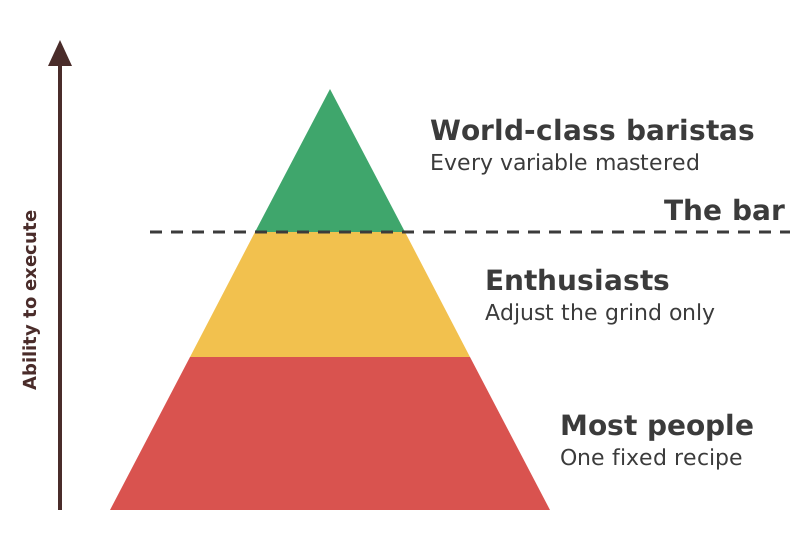
The red base is most people. They follow one recipe, use one setting, and get whatever the coffee gives them. When it tastes sour or bitter, they don’t know why or what to change.
The yellow middle is the enthusiast. They weigh their dose, time their shots and adjust their grind. But they usually change one thing, the grind, to hit a set extraction time. When a coffee still doesn’t taste right, it gets blamed on the roaster and they move on to another bag. Some coffees work well. Many never do.
The green tip is a tiny group. The best baristas in the world, the kind who compete at the World Barista Championship, spend months perfecting a single coffee. They have the skill, the palate and the time to get every variable right.
The problem
Most coffee is made with a single fixed recipe, usually something like a 1:2 espresso ratio, with grind as the only thing that changes. But roasted coffee varies enormously. A dark roast is light and brittle, easy to crush between your fingers. A light roast is dense and hard, and a hammer will bounce off it. They extract very differently, so no single recipe can suit them both.
Getting it right by hand means juggling every variable at once. Count the realistic settings for an espresso recipe: about 100 grind sizes, 10 temperatures, 11 doses, 20 shot times and 31 yields. Multiplied together, that’s 6,820,000 possible recipes.
Those are the rays in the logo: all the changes, settings and combinations you could be making, which would take years of skill to navigate on your own.
The inversion
The triangle in the logo is inverted, because CRS turns the usual method on its head. Instead of starting from one recipe and guessing at changes, you measure your beans’ density and start from a recipe already matched to that coffee. When it isn’t quite right, one rule tells you which way to go. Sour means extract more. Bitter means extract less.
The recipe series makes all those permutations for you. You don’t need years of experience to use your equipment to its full potential. Everyone gets to work at the top of the pyramid, so the triangle is green, the colour of the original tip. And green means go, like a traffic light: the system is quick and it works.
The bean
Some people notice that the logo looks a little like the Eye of Providence, the eye inside a triangle with rays, often linked with the Illuminati and secret knowledge kept by a privileged few.
The resemblance is deliberate, but the meaning is the opposite. Our pyramid is upside down, and in place of an all-seeing eye is a coffee bean. There’s no secret knowledge here. The whole point of CRS is to take what used to be known only to the few at the top and make it available to everyone who makes coffee.
Find my recipe
