


Updated October 2026 · temperature, texture and amount
Milk and coffee are a marriage made in heaven. Steam it to the right temperature, give it the right texture, and use the right amount for your roast, and it lifts the coffee instead of burying it.
Steam to 60 °C, where milk reaches its optimum sweetness, and aerate it just enough for a thick paint texture. How much depends on the roast: 210 ml for the darkest, 133 ml at 0.390 g/ml and 55 ml for the lightest.
Temperature and texture
When milk is steamed to 60 °C it reaches its optimum sweetness. Clip a thermometer to the pitcher and stop there rather than guessing by touch.
Aerate the milk just enough to produce a thick paint texture: glossy and smooth, with no big bubbles, so it blends into the espresso rather than sitting on top.
Taste the espresso before adding anything. Then add the bypass water from your recipe, and finally the steamed milk.
How much milk
Across the series the steamed milk falls from 210 ml to 55 ml as density rises. Light roasts get less milk and more bypass water, so their delicate flavours aren't buried, and a smaller cup.
milk, no bypass, 240 ml cup · 0.330 g/ml (Recipe 1)
milk, 15 ml bypass, 220 ml cup · 0.390 g/ml (Recipe 61)
milk, 30 ml bypass, 150 ml cup · 0.450 g/ml (Recipe 121)
Tips and kit
Espresso con panna (whipped cream) may be a little OTT, but adding 5–10 ml of cream to your milk before steaming can help the body and taste. Another great option is adding 15% coconut milk.
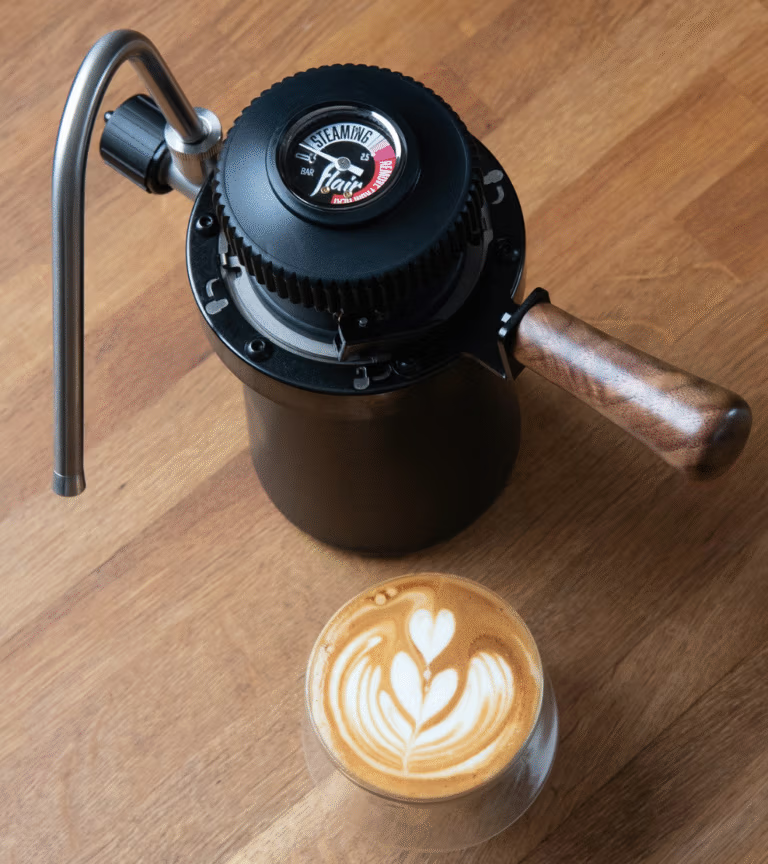
Stovetop steamer for making milk without an espresso machine wand.
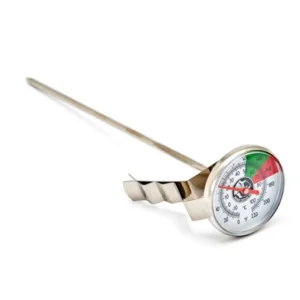
Clips to the pitcher so you can stop at 60 °C every time.
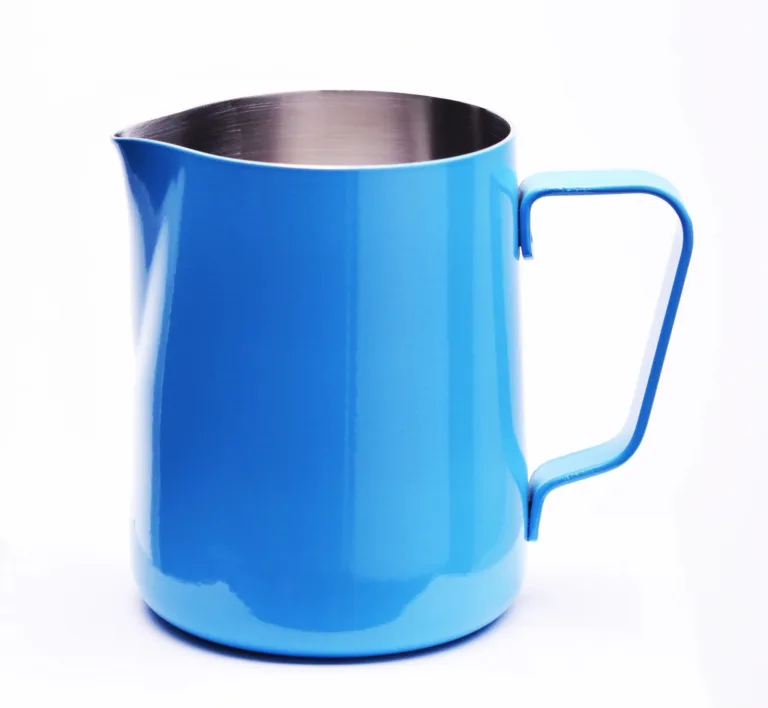
A pitcher with a good spout for steaming and pouring.
Keep reading
Find your starting recipe, then dig deeper into what drives extraction.
Find your recipe
